The layer the incumbents left open
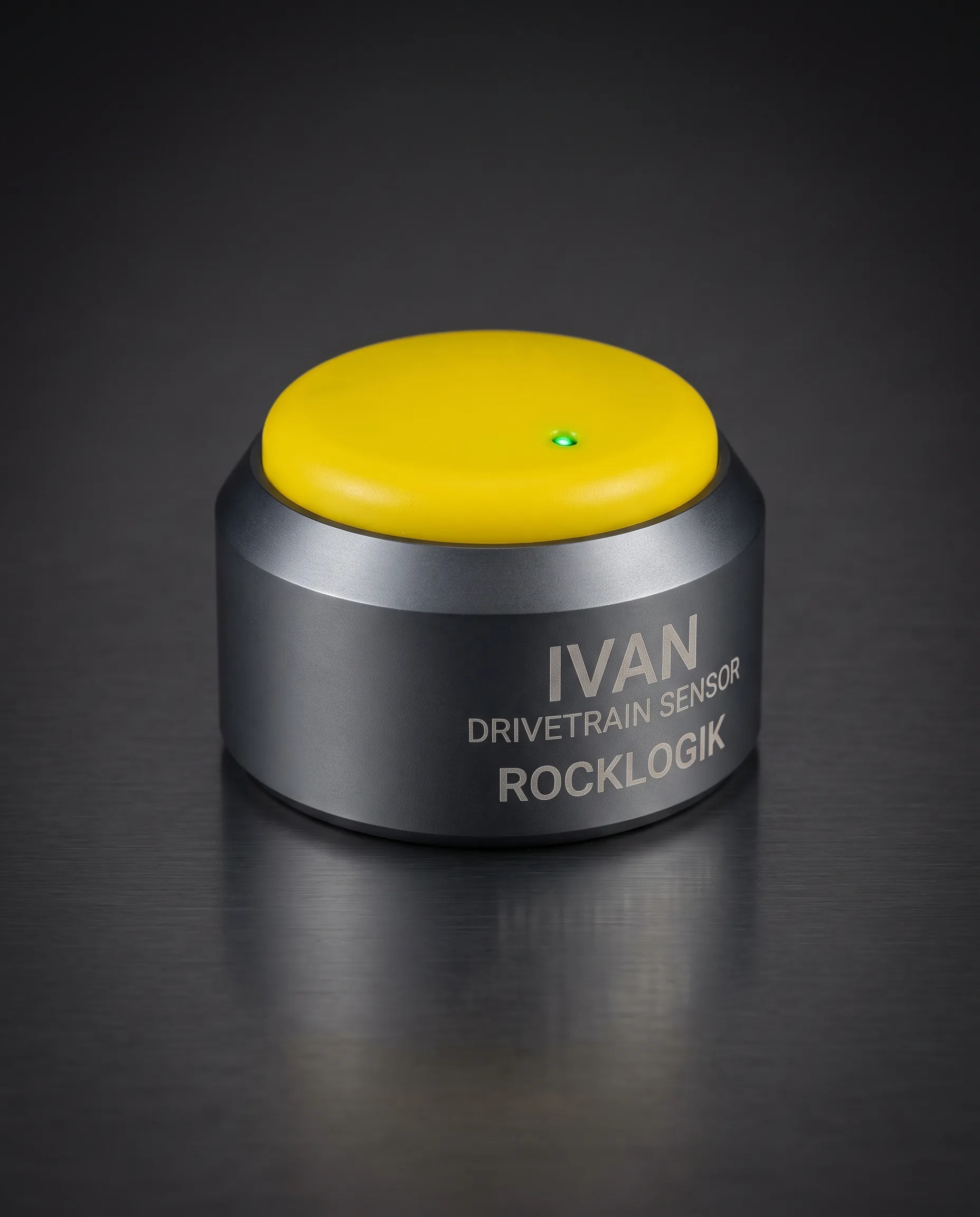
Condition monitoring in mining is a real, paid-for market. The programmes that exist cover the engine and hydraulics, report on a monthly cycle, and follow one manufacturer's equipment. Nobody offers real-time, drivetrain-specific, retrofit monitoring across a mixed fleet. RockLogik does exactly that, and only that.
Why this, and why now
Three observations from the people who run and fix these trucks. Between them they define the product.
The asset is enormous and the drivetrain is unwatched
A large haul truck costs from $500,000 to several million dollars, its engine alone $1M with a $400,000 core charge. Trucks run around the clock for six months between overhauls. The engine is instrumented; the transmission, transfer case and differentials are inspected by oil sample and by failure.
Real time is the product
The incumbent programme is well liked and costs five figures per truck per year, and its customers still ask what the use is of an oil-pressure warning from three weeks ago. A field-service leader who works with maintenance crews across western Canada told us the drivetrain gap was real and that real-time reporting would command more, not less.
The method exists; the machine was the obstacle
Vibration diagnostics for bearings and gears is mature, standardised engineering on fixed plant. It was never applied to haul trucks because they never hold a speed. Regime segmentation from the vehicle bus and order tracking from a magnetometer are what make it work on a truck, and both are now cheap enough to put in a sealed puck.
Where the trucks are
Sized from the bottom up, starting with the fleets we can reach from Kelowna.
500 to 600
large haul trucks in the Alberta oil sands alone, across a handful of operators, running continuous six-month cycles.
Every mine in western Canada
has a maintenance crew that already buys condition monitoring for the engine. The drivetrain layer is an addition to a budget line that exists.
Quarries, aggregates, earthworks
run articulated haulers in mixed fleets with little redundancy. The downtime cost per truck is smaller; the number of trucks is much larger.
Our own estimate of the addressable market for predictive maintenance on heavy off-road equipment is in the billions of dollars globally, with North American mining and forestry a meaningful fraction of it. The full sizing, with sources, is in the deck.
Per truck, per year
One recurring number per truck, with the hardware inside it. Priced against a programme the customer already pays for, and worth more because it is real time.
Revenue
An annual subscription per instrumented truck that includes the sensors, the hub, installation, the baseline programme, the cloud analysis and sensor replacement. Fleet operators buy a service level, not a box of electronics, and the renewal conversation is a value report of what was caught and what it was worth.
Cost
One sensor board, one housing and one manufacturing line serve every location on every make of truck; the baseline-recording variant is the same board. The sensor bill of materials is a small fraction of a year's subscription, and the hub is off-the-shelf industrial compute. Gross margin is a software business's, with hardware as the delivery mechanism.
Channels
Direct to mine and quarry operators through their maintenance leadership; through equipment dealers and OEM condition-monitoring programmes as the drivetrain layer they do not have; and through equipment lessors, who have the most direct interest in trucks not being run to failure.
Data
Every contract includes the exchange of maintenance records, and every fleet adds labelled failures to a dataset that does not otherwise exist. That dataset, across makes and sites, is the asset that compounds.
What is difficult to follow us on
We are honest about the competitive field. Vibration monitoring is a crowded, well-patented space on fixed plant, and OEM telematics is entrenched. What follows is what is hard to copy quickly.
Variable-speed diagnostics on a vehicle
Fixed-plant vendors assume steady shaft speed. Making order tracking, envelope analysis and regime segmentation work on a machine that changes gear every minute is the engineering core, and it is done on the sensor, within a battery budget.
Manufacturer independence
OEM programmes follow their own iron. A mixed fleet, which is most fleets, needs one system across makes, and an OEM cannot credibly offer that. A retrofit, read-only design is the only thing that can.
The labelled dataset
Drivetrain failures are rare, which is why nobody has a training set. Every site we run contributes work orders, oil analysis and teardowns aligned to sensor history. Two years in, that is not replicable by starting today.
A wedge into an existing budget
The customer already pays for engine monitoring and already values it. Being the drivetrain addition to that spend, sold to the same person, is a much shorter sale than creating a category.
Trucks, loaders, drills
In the order the industry told us to build it.
-
1
Rock trucks now
Articulated and mechanical-drive rigid haulers
-
2
Loaders next
Wheel loaders and their transmissions, axles and articulation
-
3
Drills later
Rotary drill drivetrains and rotary heads, where a stoppage halts the whole pit
Partners
If you are any of these, there is a conversation worth having.
Mine and quarry operators
Sites with ten or more haulers who want the drivetrain layer on their existing programme.
OEM programmes and dealers
Condition-monitoring programmes that cover the engine and want to offer the drivetrain, under their badge or ours.
Equipment lessors and financiers
Whose residuals depend on trucks not being run to the breaking point.
Investors
Hardware-enabled recurring revenue, an industrial customer who already pays for the category, and a dataset that compounds.
The full pack, under NDA
The pitch deck, the device design documents, the signal-processing and analysis plan, the bill of materials, the market sizing with sources and the financial model. Tell us which parts matter to you and we will send those.