Fitted in a shift. Learning from day one.
A RockLogik deployment is a programme, not a box. It starts with a mounting survey on your trucks, learns the fleet's normal behaviour before it judges anything against it, and goes live with thresholds your maintenance team agreed to. This page is the whole process, start to finish.
Baseline, monitor, fleet
Every site goes through the same three stages. The durations are typical for a first fleet of ten to twenty trucks.
Baseline
8 to 12 weeks
We survey the trucks, agree the sensor locations and mounting, fit the sensors and the hub, and record. The system learns what normal looks like for each asset, each location and each operating regime, and we pull maintenance records into the same timeline.
You get
- Mounting survey and installation plan
- Baseline per truck, location and regime
- Maintenance-history alignment
- Go-live thresholds agreed with your planner
Monitor
from week 12
With the baseline learned, the same sensors start judging against it. The system runs in shadow first, logging what it would have said, then goes live with watch and advisory levels chosen with your maintenance team. Every alert is a trend on a named component with a recommended action.
You get
- Live fleet dashboard and phone alerts
- Shadow-mode report before go-live
- Monthly review of open items and outcomes
Fleet
ongoing
Coverage expands across the fleet and integrates with your maintenance system, so a watch becomes a work order. Each quarter we report what was caught, how far ahead, and what it was worth.
You get
- CMMS work-order integration
- Quarterly value report
- New vehicle classes as they join the fleet
Mounting is the whole game
Where a sensor sits decides what it can hear. The first day on site is spent on the trucks with your mechanics, not in a meeting room.
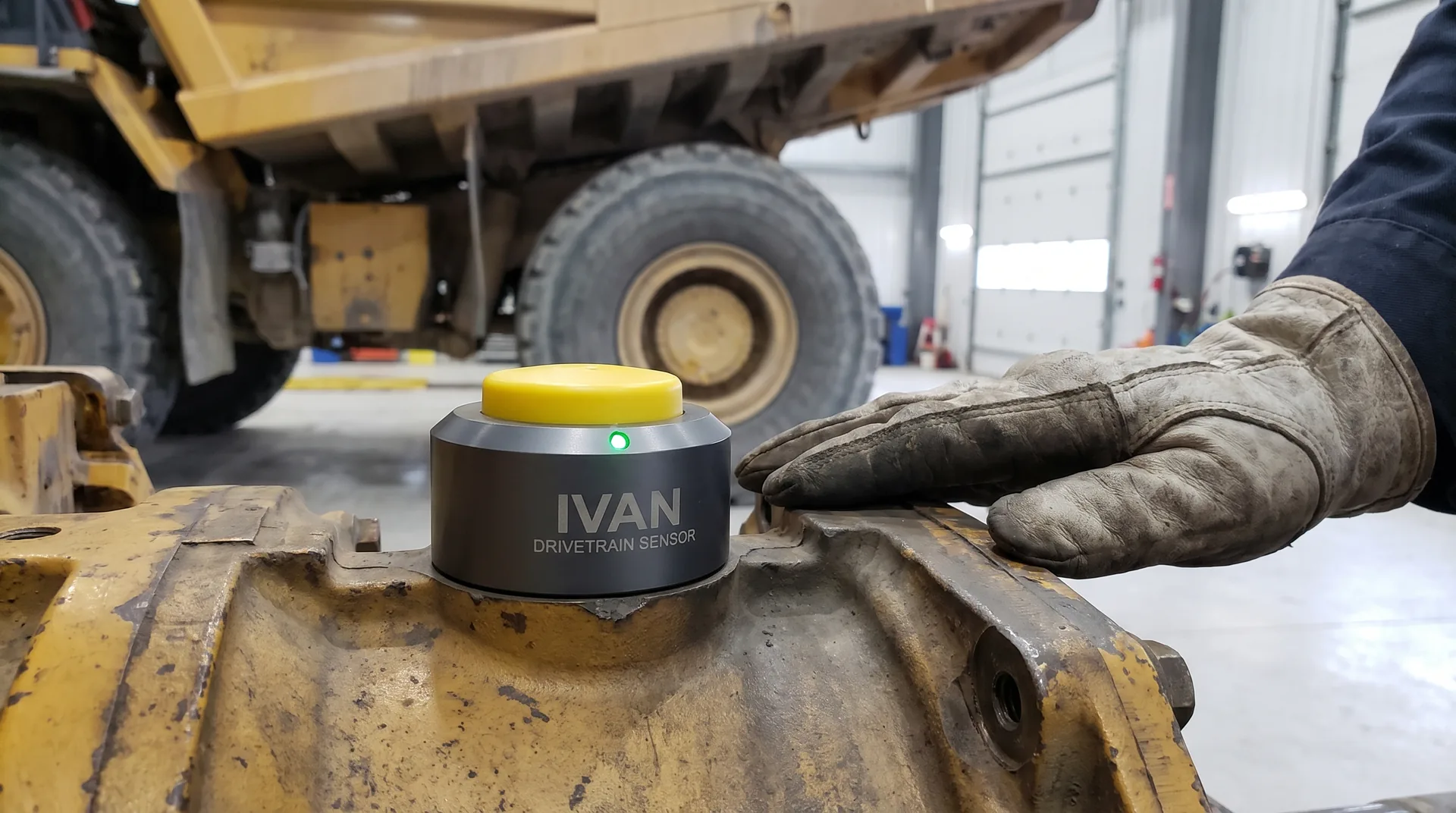
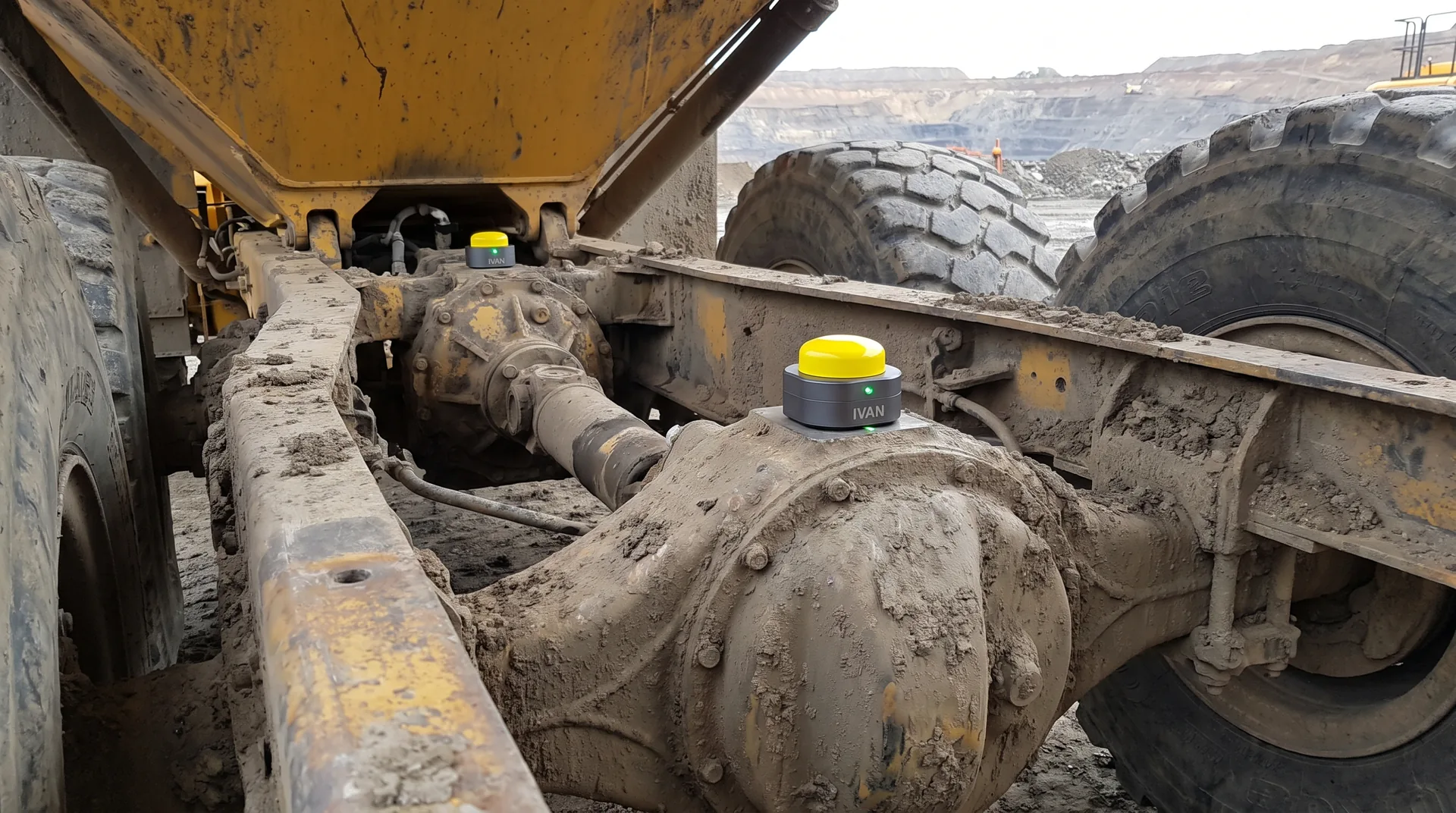
A magnetic mount rolls off above a couple of kilohertz and would throw away the bandwidth the sensor was built for. So IVAN sits flush on a machined pad that is bolted to the housing, or bonded where drilling is not acceptable. We agree every location, and whether it can be fitted on the pad or needs the truck in the shop, before anything is drilled, and we clear it against your warranty terms.
For each location we record the bearing geometry and gear tooth counts for that model of truck. That is what turns a vibration spectrum into named defect orders, and it is done once per model, not once per truck.
The deal, plainly
Four things, all of them agreed in the programme contract so nobody is surprised in week six.
Access to the trucks
A shift per truck for installation, with a mechanic who knows the fleet. Sensors on the differentials and transfer case can usually be fitted on the pad; the transmission may need the shop.
Read-only access to the bus
Firefly listens to the J1939 diagnostic port through a pass-through cable. It cannot transmit. We confirm this with your OEM dealer or warranty holder before installation if you want us to.
Maintenance records
Work orders, oil analysis results and teardown reports for the monitored trucks, past and ongoing. This is how the system learns what your failures look like, and it is written into the contract as a two-way exchange.
A named planner
One person who receives the watches and tells us what happened when the truck was inspected. Their feedback tunes the thresholds; the quarterly value report is written for them.
Mines, quarries, and the contractors who serve them
Surface operations running articulated or mechanical-drive rigid haulers, of any make.
Open-pit mines
Large mixed fleets on long haul cycles, where a stopped truck stops a loader and a section of the plan.
Quarries and aggregates
Smaller fleets with less redundancy. One truck down is a measurable share of the day's production.
Earthworks contractors
Rental and owned fleets moving between sites. Sensors move with the truck; the baseline comes with it.
Equipment lessors and dealers
Lessors do not want trucks run to the breaking point. Monitoring protects the residual, and catches failures inside warranty.
Scope, stated plainly
RockLogik is specified for surface operations. Underground and explosive-atmosphere environments carry a separate certification burden that the current hardware does not claim. If that is your site, tell us; it is on the roadmap, and we would rather say so than drift into it.
Trucks first, then loaders, then drills
The order the industry asked for. When a drill stops, the whole pit stops behind it.
-
now
Rock trucks
Articulated and mechanical-drive rigid haulers
-
next
Loaders
Wheel loaders and their transmissions, axles and articulation
-
later
Drills
Rotary drill drivetrains and rotary heads, where a stoppage halts the whole pit
Start with a survey
Tell us the site, how many trucks and what they are. We will come and look at them, and come back with a mounting plan and a per-truck price.